You invested in a steel building for its durability and low maintenance. But low maintenance doesn't mean no maintenance. Skipping seasonal checks can lead to rust, leaks, and even structural failure.
Here's the truth: a steel building maintained with two annual inspections can last 50–60+ years. One neglected for five years can show significant corrosion and fastener failure. The difference is a few hours of work each season.
How many inspections per year does a standard steel building need to last 50–60+ years?
Select one answer.
Spring inspection: repair winter damage
Winter is tough on any structure. Snow loads, freeze-thaw cycles, and wind can loosen fasteners and stress panels.
Start with a visual walkaround. Look for loose or rusted fasteners, chipped paint, and any dents or scratches in the panels. These are entry points for moisture.
Check the roof carefully. Inspect for cracks, leaks, or areas where water may have pooled. Pay special attention to flashing around vents and roof penetrations.
Clean gutters and downspouts. Winter debris and ice can clog drainage. Blocked gutters cause water to back up onto the roof and foundation.
Pressure wash the exterior. Dirt and grime can stain panels and accelerate corrosion. A yearly wash keeps the protective coating intact.
Trim vegetation. Bushes and hedges touching the building trap moisture against the walls, leading to mold and rust. Keep them at least six inches away.
Summer checklist: beat the heat and storms
Summer brings intense sun, humidity, and severe storms. Your building expands and contracts with temperature swings, which can stress seals and joints.
Inspect sealants and expansion joints. Cracked caulking or separated joints let moisture in. Replace any dried or brittle sealants before they fail.
Check doors, windows, and weatherstripping. Look for air leaks, worn seals, or misaligned hardware. A tight building envelope improves energy efficiency.
Test your HVAC system. Replace air filters and inspect ducts. A system running at peak efficiency handles summer demand without strain.
Examine gutters and downspouts again. Summer storms can overwhelm clogged drainage. Ensure water flows freely away from the foundation.
Fall preparation: get ready for winter
Fall is the most critical inspection window. You need to address every issue before snow and ice arrive.
Inspect insulation. Check for signs of moisture or pest damage. Deteriorated insulation reduces energy efficiency and can lead to condensation problems.
Check for rust and corrosion. Look at all metal surfaces, especially near the base of walls and around fasteners. Treat any rust spots immediately with a rust-inhibiting primer and paint.
Clear the roof of debris. Leaves, branches, and dirt trap moisture. A clean roof sheds snow more evenly and reduces the risk of ice dams.
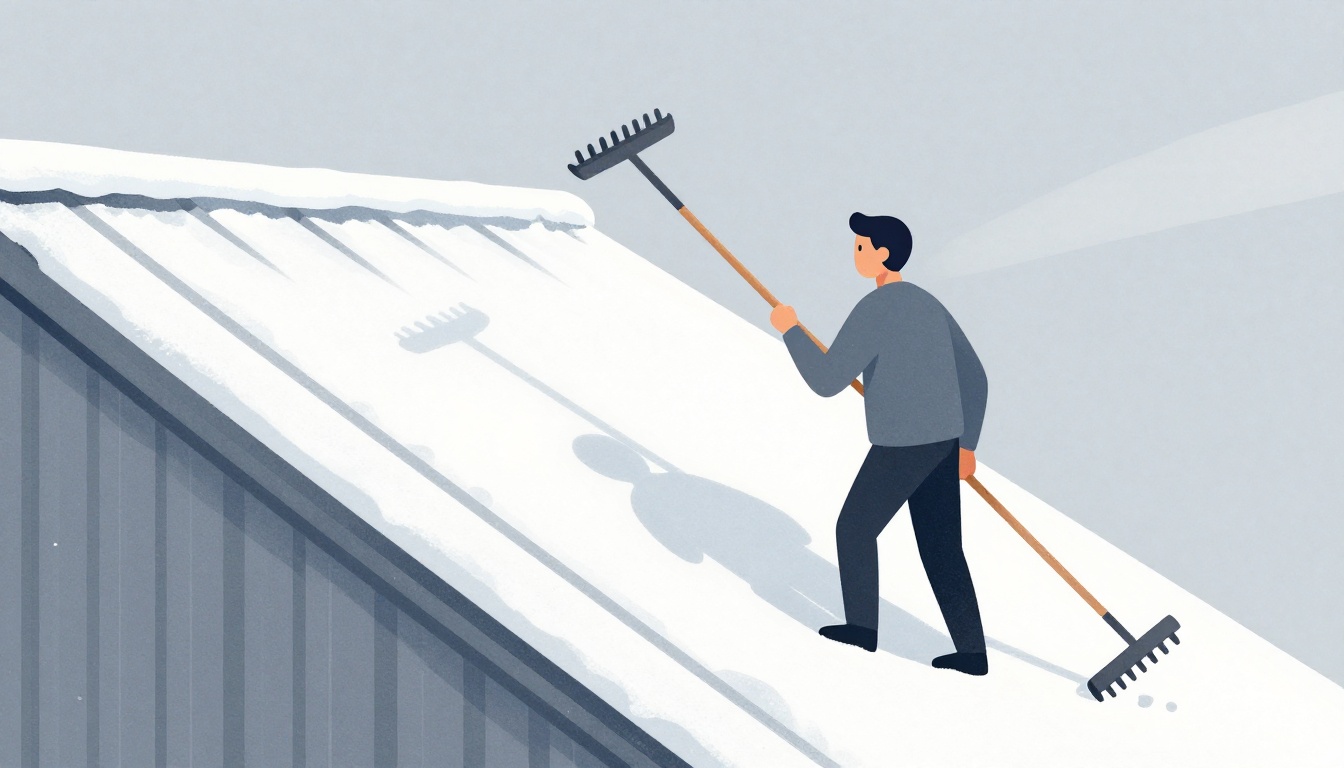
Test snow removal equipment. Have a roof rake and plastic shovel ready. Never use metal tools on steel roofing — they can scratch the protective coating.
Winter watch: manage snow loads
Snow accumulation is the biggest winter risk. Even a few feet of snow can weigh over 50 pounds per square foot, and drifting can double that load.
Monitor snow depth after every storm. If snow exceeds 12 inches, do a walkaround. Look for sagging ceiling panels or unusual sounds from the roof structure.
Remove snow evenly. On gabled buildings, clear both sides of the ridge at the same time to maintain balanced loads. Start at the eaves and work upward.
Watch for ice dams. Ice buildup in gutters and at roof edges can block drainage and cause water to back up under panels. Use heat tape in gutters if needed.
Never chip at ice. Using an ice pick or metal shovel can puncture the roof membrane. Use a plastic shovel or roof rake, and consider hiring a professional for steep roofs.
Your quick seasonal checklist
- Spring: Visual inspection, roof check, clean gutters, pressure wash, trim vegetation
- Summer: Sealant inspection, door/window seals, HVAC service, drainage check
- Fall: Insulation check, rust treatment, debris removal, snow equipment prep
- Winter: Snow depth monitoring, even snow removal, ice dam prevention
How the Resident Expert Can Help
You don't have to manage this alone. Warthog Steel Co designs and builds custom steel barns, sheds, garages, and carports that are engineered to withstand your local climate from day one. Their veteran-owned team focuses on durability and craftsmanship, so your structure starts with a strong foundation for easy seasonal maintenance. Whether you need a new building or advice on caring for your existing one, they can help you protect your investment for decades.
Quiz: test your knowledge
Before you go, check your understanding with this quick quiz based on the checklist above.