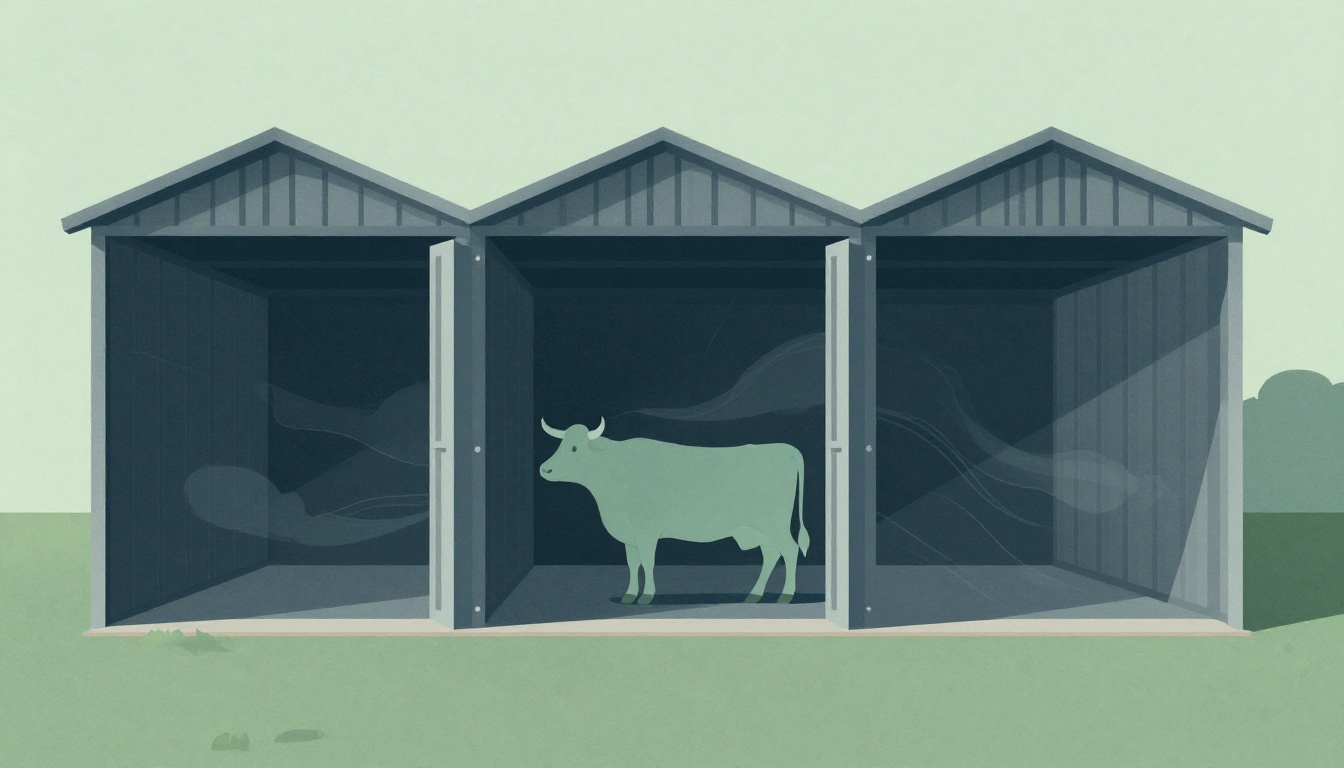
If you house livestock in a steel barn, ventilation is not optional—it's a critical component of animal health and building longevity. Animals produce heat, moisture, and gases like ammonia from waste, and these accumulate quickly in an enclosed metal structure, directly harming respiratory health and increasing stress. Without proper airflow, your barn can become a breeding ground for bacteria and viruses, and condensation can corrode steel panels over time. This guide explains how to design a ventilation system that keeps your animals healthy and your building standing strong.
What is the recommended ventilation rate for dairy barns during summer months?
Select one answer.
Why steel barns need special ventilation attention
Steel conducts heat 400 times faster than wood, which means metal barns heat up rapidly in summer and can trap moisture and corrosive gases if airflow is poor. Agricultural barns often require higher air exchange rates to maintain animal health, and larger steel buildings trap more heat and moisture, making ventilation design even more critical. Proper airflow prevents respiratory diseases, reduces humidity, and eliminates harmful gases such as ammonia that build up from animal waste. Poor ventilation creates conditions that can devastate your herd and shorten the life of your building.
Natural ventilation: the foundation for most livestock barns
Natural ventilation relies on wind and temperature differences to move air. It's the most cost-effective approach and works best for large animals like beef and dairy cattle over 700 pounds and swine over 75 pounds. Key components include:
- Open sidewalls: Maximize exposure to prevailing winds, especially when temperatures exceed 80°F, to minimize heat stress.
- Ridge vents: Installed at the roof peak, they allow rising hot air and moisture to escape naturally.
- Soffit vents: Placed under the eaves, they draw cooler outside air in, complementing ridge vents.
- Wall louvers: Fixed openings that let fresh air in while protecting the interior from debris.
A good rule of thumb is to provide at least four air changes per hour in most livestock facilities. Position intake and exhaust points to create cross-ventilation without creating drafts directly on animals. For example, a naturally ventilated freestall barn with curtain sidewalls and a ridge opening can effectively manage airflow in many climates.
When to add mechanical ventilation
While passive systems help, only mechanical fans reliably remove ammonia and corrosive gases that threaten both animal health and your building's lifespan. Mechanical ventilation is essential when natural airflow is insufficient—such as in hot, humid climates or for high-density housing. Common types include:
- Exhaust fans: Pull fresh air from outside, removing stale, moisture-laden air.
- Circulation fans: Move air within the barn to create uniform temperature and humidity.
- Tunnel ventilation: Uses fans and inlets to create a continuous flow of air through the length of the barn.
- Cross ventilation: Draws air parallel to stalls, creating a "cross" airflow.
For dairy barns, the recommended ventilation rate during summer is around 40 to 60 air changes per hour. For horse barns, a rate of 25 cubic feet per minute (cfm) per 1,000 pounds of horse is suggested, with continuously running sidewall exhaust fans providing the best results. Mechanical systems require a higher initial investment due to equipment and electrical infrastructure, but they offer precise control and reliability.
Designing your ventilation system: a practical checklist
Follow these steps to ensure your steel barn's ventilation meets animal health needs:
- Assess your climate and animal type: Determine whether natural, mechanical, or a combination is best. Large animals often thrive with natural ventilation, but high-density or sensitive species may need fans.
- Calculate air exchange needs: Use air changes per hour (ACH) as your baseline. Most livestock facilities need at least 4 ACH, but summer rates for dairy can reach 40-60 ACH.
- Position intakes and exhausts: Place low-level intakes (soffit vents, wall louvers) and high-level exhausts (ridge vents, fans) to create a continuous airflow path. Avoid drafts directly on animals.
- Balance intake and exhaust: Ensure every cubic foot of interior air is replaced regularly—for a 40×80 barn, that might mean replacing the entire volume every 5-7 minutes in summer.
- Consider insulation and coatings: Metal roofs with polyester coatings can reduce heat transfer by 40% compared to galvanized finishes, helping to moderate temperatures and reduce condensation.
- Plan for maintenance: Mechanical fans require regular inspection and cleaning. Belt-driven fans are more efficient but need periodic belt replacement; direct-drive fans have lower efficiency but less maintenance.
Quiz: Test your ventilation knowledge
Before you finalize your barn design, check your understanding with this quick quiz.
Question: What is the recommended ventilation rate for dairy barns during summer months?
- 4 air changes per hour
- 25 cubic feet per minute per 1,000 pounds of animal
- 40 to 60 air changes per hour
Correct answer: 40 to 60 air changes per hour. This rate is recommended by dairy extension specialists to manage heat stress and maintain air quality in high-density housing.
How the Featured Expert Can Help
Warthog Steel Co. designs and builds custom steel barns, sheds, garages, and carports across the USA. As a veteran-owned company, they emphasize durability, craftsmanship, and personalized service for agricultural and residential clients. Their team can help you plan a ventilation system that meets your livestock's needs and your building's structural requirements. Visit Warthog Steel Co. to discuss your project.