If you're building a steel barn or shed in a region that gets heavy snow, the roof style you choose can make or break the structure. A roof that traps snow adds dangerous weight, increases the risk of collapse, and can lead to costly repairs.
You need a roof that sheds snow naturally. The shape, slope, and material all play a role in how well your building handles winter weather. Here's what you need to know to make the right call.
According to ASCE 7-22, what factor is used to convert ground snow load to flat roof snow load?
Select one answer.
Why roof shape matters for snow load
Snow load isn't just about how much snow falls. It's about how much stays on your roof. According to ASCE 7-22, flat roof snow load is calculated by multiplying ground snow load by a 0.7 exposure reduction factor, but that's only the starting point. Steeper roofs shed snow more easily, while flatter roofs have to carry it longer. That's why two buildings in the same area can have totally different snow load requirements.
A roof with a slope of 30 degrees or more can reduce the snow load by up to 40% compared to a flat roof, depending on surface type and exposure. That's a massive difference in structural demand.
Gable roofs: the classic snow shedder
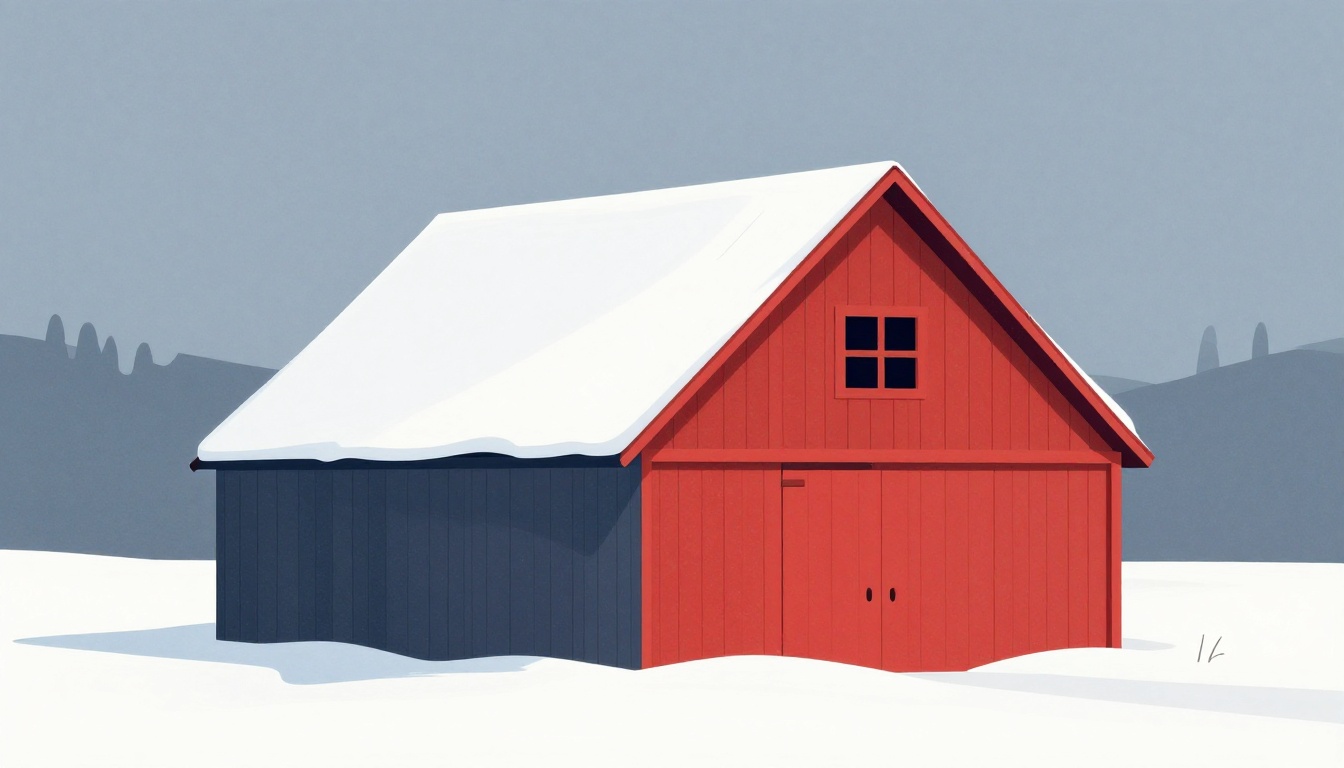
A gable roof is the most common choice for steel barns in snowy climates. Its steep slopes allow snow to slide off naturally, especially if you use a slippery metal surface. The simple design also makes it easy to reinforce for high snow loads.
For maximum performance, aim for a pitch of at least 6:12 (six inches of rise per foot of run). This slope encourages snow to release before it accumulates to dangerous depths.
Hip roofs: four-sided protection
Hip roofs slope down on all four sides, which makes them more aerodynamic and stable in high winds. They also shed snow well, though not quite as efficiently as a steep gable. The trade-off is better resistance to uplift and a more uniform load distribution.
Hip roofs are a strong choice if your area gets both heavy snow and strong winds. They require more framing and material, but the added stability can be worth it.
Flat and low-slope roofs: the risk factor
Flat roofs (slope less than 5 degrees) are the most vulnerable to snow accumulation. They require significantly more structural support and often need mechanical snow removal. Even a low-slope roof (2:12 or less) can trap snow and ice, leading to ponding and potential collapse.
If you must use a flat roof, you'll need to account for higher snow loads in your design. The minimum snow load for low-slope roofs is calculated independently of other adjustments, per ASCE 7-22 Section 7.3.3.
Metal roofing: why it works for snow
Steel roofs have a natural advantage in snowy climates. The smooth, slick surface allows snow to slide off more easily than asphalt shingles or wood. Many metal panels also have interlocking seams that prevent water and ice from seeping underneath.
To maximize shedding, choose a standing seam or exposed fastener panel with a slippery coating. Avoid textured or painted finishes that can grip snow.
Actionable checklist for choosing your roof style
- Check your local ground snow load using ASCE 7 maps or your building department.
- Choose a roof slope of at least 6:12 for gable roofs, or 4:12 for hip roofs.
- Use a smooth metal roofing panel to encourage snow shedding.
- Install snow guards or stops if you need to control sliding snow near walkways.
- Reinforce eaves and valleys, as these areas experience the highest drift loads.
- Consider a roof with a steep pitch if your ground snow load exceeds 50 psf.
How the Resident Expert Can Help
Choosing the right roof style for your steel barn doesn't have to be a guessing game. At Warthog Steel Co, we design custom steel buildings that are engineered for your specific climate and snow load requirements. Our team works with you to select the optimal roof shape, slope, and materials so your structure stands strong for decades. Whether you need a steep gable barn or a reinforced low-slope shed, we deliver durable, code-compliant solutions tailored to your farm or ranch.